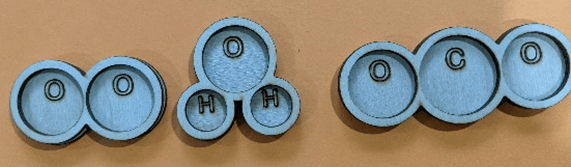
I'm seeing more and more schools with Glowforge (or other) laser cutters in their makerspaces. If your school has one, put your students to work assembling materials for your science class! I've been experimenting with some designs of my own, and thought I'd share some photosynthesis and respiration materials here.
Tag: Resources
Literacy Learning Cycles for Elementary Classes
I have shared before that the Georgia Department of Education has prepared a variety of free literacy learning cycles for elementary school. While these are tied to the Georgia Standards, many of these will be useful in any location. Each one contains science activities, followed by a related article with a specific reading skill, and … Continue reading Literacy Learning Cycles for Elementary Classes
Free, Print-Ready Science/Reading/Writing Lesson Plans from the Georgia DOE
Last summer, the Georgia Department of Education put together a team to write a series of literacy learning cycles in the style of my Once Upon a Science Book series. These fantastic resources include a science activity, a science article with a related reading skill, a specific writing skill, and a writing assignment. They truly … Continue reading Free, Print-Ready Science/Reading/Writing Lesson Plans from the Georgia DOE
New Year, Get Set with Lab Safety
In my first school, another new teacher and I inherited back rooms stuffed with 25 years of dissection specimens that were older than my students, random chemicals, unmarked bottles, etc.
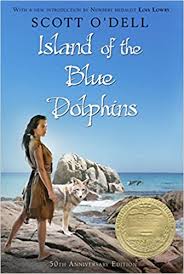
Island of the Blue Dolphins
This classic Newbery winner by Scott O'Dell was based on a true story--and the island involved is now a National Park. (Well, the exact island is not, but the one next to it is!) The National Park Service has put together a rich collection of material related to the book and the true story--including historical … Continue reading Island of the Blue Dolphins
GREAT resource for teaching reading for academic texts
I LOVE the work of the Reading Apprenticeship group (Schoenbach, et. al.). I was delighted to discover that they are now producing content modules, which are available online for free. These modules are similar to what I'm trying to do in my Once Upon a Science Books--they provide all the resources you need, with step-by-step … Continue reading GREAT resource for teaching reading for academic texts
Getting Administrators Interested in Science
I was at a science conference recently and overheard several conversations between teachers who were frustrated that science time was being cut at their school to allow for more time to drill reading, writing, and math. I came home and decided to put together one more video to directly address why that's a loss for … Continue reading Getting Administrators Interested in Science
A Classroom Full of Data
I wrote earlier about Data Nuggets, a great website for helping students connect math (and understanding how it is used in research) with science. Here are two other teacher-focused websites that offer real data sets from real research along with help introducing data analysis to your students. Science in the Classroom is put out by … Continue reading A Classroom Full of Data
Cool hooks and phenomena to drive explorations!
Are you familiar with GSTA's Georgia Standards of Excellence Phenomena Bank? A phenomenon is an interesting "hook" for a topic that students can use to drive exploration. For example, The Blue People of Troublesome Creek introduces a (real life!) family in rural Kentucky who were blue. Students can work from this unusual example to studying … Continue reading Cool hooks and phenomena to drive explorations!
Primary Sources for School Librarians
I got this information in an email recently: Thursday, October 12th School Librarians Get to the Source FREE Webinar, 1:00-2:00 p.m. ET TPS-experienced elementary, middle, and high school librarians discuss key considerations for connecting Library of Congress resources with K-12 classrooms. Tom Bober, Heather Balsley, and Jenn Hanson provide insight and strategies to promote inquiry … Continue reading Primary Sources for School Librarians